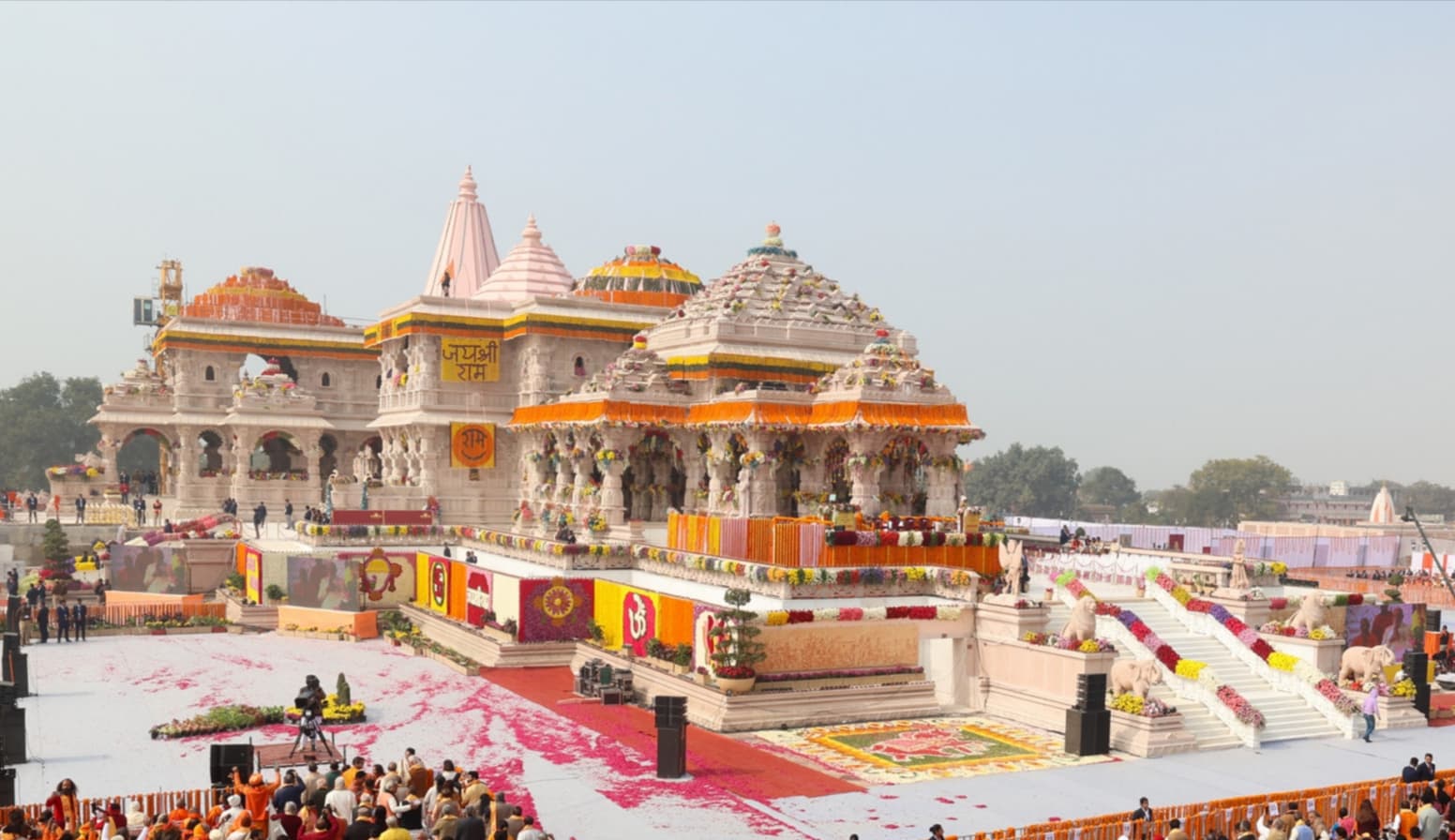
Best Time to Visit Ayodhya: Month by Month
Ayodhya sits in the Gangetic plain, so it has three genuinely different seasons and a fourth that people forget about — the festival weeks, when the city fills to capacity and the weather stops being the main thing you are planning around.
The short answer
October to March is the comfortable window. Late February to mid-March is the sweet spot: mild weather, and the Ram Navami crowds have not yet arrived. Avoid the last week of March into early April unless you are coming specifically for Ram Navami and have booked months ahead.
Season by season
| Season | Months | Temperature | Crowds | Verdict |
|---|---|---|---|---|
| Winter | Nov – Feb | 8–24°C | Moderate, heavy at Diwali and Chhath | Best weather. Mornings are cold, layer up. |
| Spring | mid-Feb – Mar | 15–32°C | Light until Ram Navami, then extreme | The sweet spot, but book early. |
| Summer | Apr – Jun | 28–44°C | Light, except Ram Navami | Hot. Do the temple early, rest at midday. |
| Monsoon | Jul – Sep | 26–36°C, humid | Light | Saryu runs high and muddy, and the ghats can be slippery. |
Festival calendar
Diwali and Deepotsav (October or November). Ayodhya's Diwali is not the same festival you see elsewhere. Lakhs of diyas are lit on the Saryu ghats, and the city holds the record for the largest display of oil lamps. It is genuinely worth seeing once. It is also the single hardest week of the year to find a room.
Ram Navami (March or April). Ram's birthday, and the largest pilgrimage of the year. The queue for darshan is at its longest. If you come for this, book accommodation two to three months ahead and accept that a darshan slot may be a full day's work.
Chhath Puja (October or November, six days after Diwali). Important on the Saryu, smaller than Diwali but the ghats are busy at dawn and dusk.
Maha Shivratri (February or March). Busy at Nageshwarnath and the older Shaivite temples.
22 January. The anniversary of the Ram Mandir consecration. A solemn, crowded day in the temple complex.
Month by month, briefly
- January — Cold mornings, clear days, manageable crowds. A good month.
- February — Warming up, comfortable, quiet.
- March — The best of the spring, until Ram Navami arrives.
- April — Hot and getting hotter. Ram Navami falls here in most years.
- May — The hottest month. Temple at dawn, indoors by eleven.
- June — Pre-monsoon heat and humidity, thin crowds.
- July to September — Monsoon. Rain is heavy but not constant; the city is at its greenest and emptiest. Some ghats get slippery.
- October — Rain tapers off, weather turns pleasant, Diwali approaches.
- November — Excellent. Diwali and Chhath done, weather settled.
- December — Cold and clear. The most popular month after Diwali, so book ahead for the last week.
What to pack by season
Winter (Nov–Feb): a proper jacket for the morning, layers for the afternoon. The temple floor at dawn is cold on bare feet.
Spring and autumn: light cotton, a thin layer for the evening, sunscreen.
Summer (Apr–Jun): loose cotton, a hat, and more water than you think you need. Do not plan a long walk between noon and four.
Monsoon: an umbrella rather than a poncho, and footwear you do not mind getting wet — you will be removing shoes at temple entrances regardless.
Two things people get wrong
They plan around weather and forget the crowds. A comfortable March day during Ram Navami is worse than a hot May day with the temple to yourself. If your priority is a peaceful darshan, come in the shoulder weeks.
They book the hotel last. In the Diwali and Ram Navami weeks the good properties go first, and what is left is expensive and far out. Our guide to where to stay in Ayodhya covers which areas to look at.
Where to go next
- Ayodhya Ram Mandir VIP Darshan Tour, 3 days from ₹4,999 — dates held through peak season.
- Ayodhya in two days: a realistic itinerary — what to do once you are here.
- Ayodhya tour package cost — how the season changes what you pay.
Planning this trip and want someone local to handle it? Our office is on NH 28, Deokali Bypass, opposite Hotel Panchsheel, Ayodhya Dham. Message the desk on WhatsApp at +91 84008 08200 and we will put together an itinerary for your dates.
Planning this trip?
Talk to our Ayodhya desk before you book anything.
We are a local Ayodhya agency — hotels, darshan passes, AC cabs and guides arranged by the same team that meets you at the airport. Rated 4.9 on Google by pilgrims who travelled with us.
Written by the Go Ayodhya desk
A local team on Deokali Bypass, Ayodhya — we run the ground ourselves, not through sub-contractors. Anything in this guide we can also arrange for your dates: about us or talk to us.