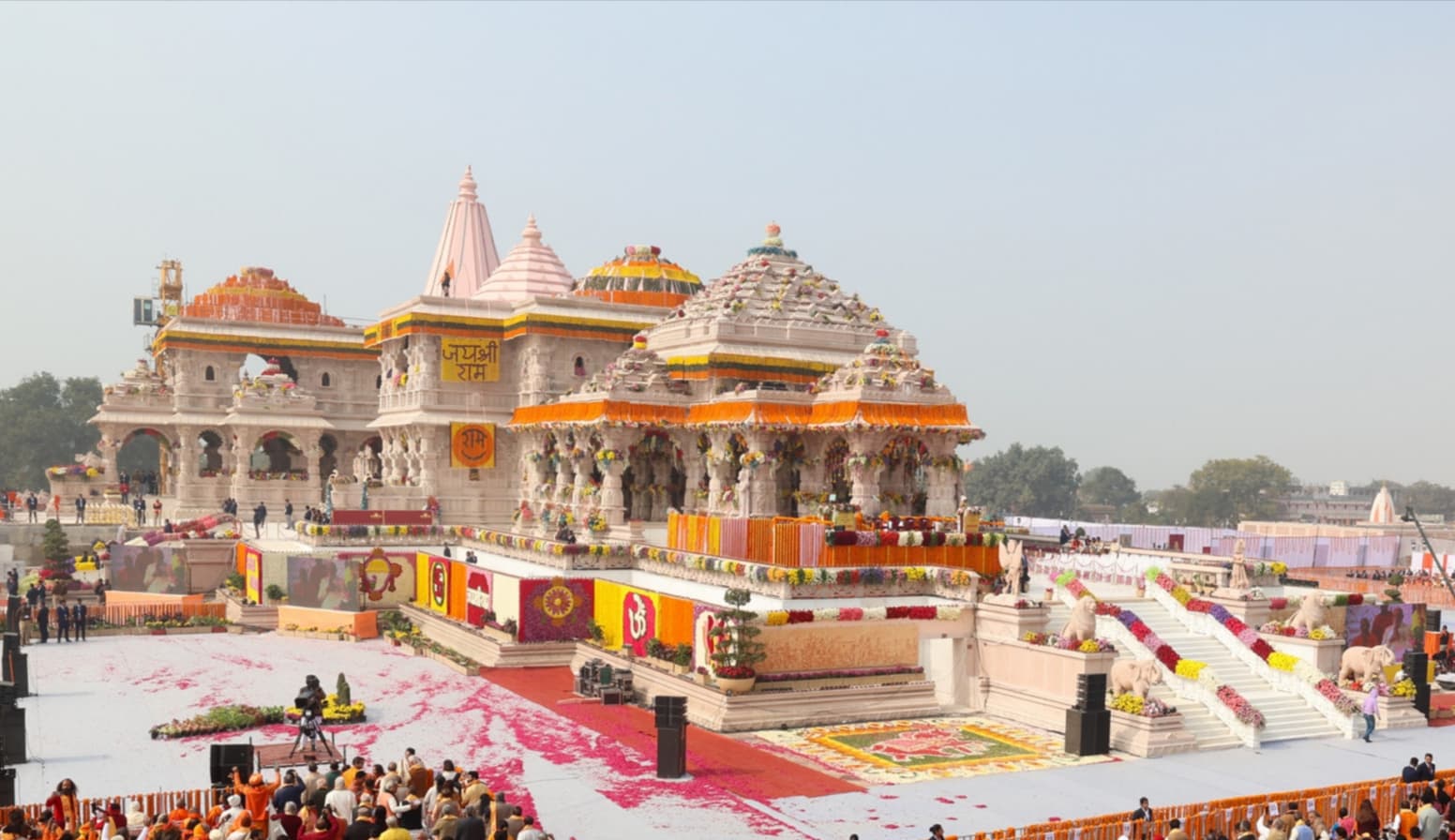
Ram Mandir Darshan for Foreign Nationals & OCI Holders
The temple is free to enter for everyone — Indian citizen, foreign passport, OCI, any faith. There is no foreigner fee, no VIP price, and no queue you can buy your way past. The only things that genuinely differ for a foreign passport are the ID you carry and a couple of practical details that trip people up at the gate. This is the short, correct version.
First, the myths worth killing
There is no VIP darshan. The paid "VIP pass" system was scrapped; darshan now runs on two tracks — free general walk-in, and the free Sugam Darshan e-pass for a faster, time-slotted entry. Both are free.
Nobody can sell you a pass. Sugam e-passes are issued only on the official Trust portal, online.srjbtkshetra.org. The Trust does not authorise any agent for online bookings. Anyone quoting a price for a "pass" — in a hotel lobby, on WhatsApp, anywhere — is selling you nothing.
Foreigners pay nothing extra. Entry, the e-pass, and the aartis are free.
The ID question, solved
For the Sugam Darshan e-pass, the accepted identity documents include passport, alongside Aadhaar, voter ID, PAN and driving licence. That means an overseas family books the same way everyone else does:
- 1 Register on online.srjbtkshetra.org — slots open 15 days ahead at midnight IST.
- 2 One mobile number covers up to 8 devotees; each traveller’s ID is uploaded during booking (passport works).
- 3 Print the e-pass and carry the same original IDs on the day. The pass-holder queue is separate from general walk-in.
If the slot you want is gone, remember general darshan is always open, free, and needs no booking — just a longer queue.
OCI and e-OCI holders
India moved to the e-OCI digital record on 30 June 2026. New applicants no longer receive a physical booklet, and a new foreign passport no longer requires a booklet re-issue — the record is updated digitally instead. If your OCI booklet predates this, carry what the current MHA or VFS guidance asks for and check it shortly before you fly; this is the one area that has changed repeatedly.
Booking from your timezone
Midnight in Ayodhya is mid-afternoon in North America and evening in the Gulf — the 15-day window is friendlier to you than to Indian pilgrims fighting it at 12 a.m.
| Your city | Slots open around |
|---|---|
| New York / Toronto | 1:30–2:30 PM (daylight-saving dependent) |
| London | 6:30–7:30 PM |
| Dubai / Abu Dhabi / Doha | 10:30 PM |
| Singapore | 2:30 AM |
| Sydney / Melbourne | 5:30–6:30 AM |
On the day: the gates, the rules, the queue
- Carry: printed e-pass (if booked), original passport for each traveller.
- Leave behind: phones, cameras, smart watches, power banks, leather items, food. Free cloakroom facilities are at the main gate — and the queue for them is what makes people miss their slot, so travel light.
- Dress: there is no strict uniform, but traditional clothing is expected in the older temples and is what most pilgrims wear. Slip-on shoes save real time at each shoe-drop.
- Arrive before your window, not at its start. Security screening is thorough and constant.
Aarti attendance — the best free thing in Ayodhya
Five aartis run daily; attending inside is free but limited to a small number of pilgrims per session, booked on the same portal and gone within minutes. Shringar (morning) and Sandhya (evening) are the most sought after; Mangala (pre-dawn) is the most peaceful and the easiest to get. If an aarti matters to your family, book the day slots open and build the morning around it — arrive 30 minutes early; aarti attendees use a separate entrance.
Practical matters for a first visit from abroad
- Money: everything is in INR. Hotels, restaurants and bigger shops take cards and UPI; small stalls, autos and prasad counters are cash. Draw cash at the airport or an authorised exchange — not from anyone who approaches you.
- Connectivity: arrange an Indian eSIM or international roaming before you land; you will want a working phone for the driver, and for the e-pass if you booked one.
- Best months: October to March. If you are coming exactly for Deepotsav (7–8 November 2026), book everything months ahead — it is the busiest week of Ayodhya's year.
- Give yourself three nights. Jet lag and a darshan morning do not belong on the same day. Our three-night plan covers the pacing.
If you would rather hand it all to someone local
We are an Ayodhya agency — pickups with a name placard, verified hotels we have walked through ourselves, E-cart and wheelchair help for elders, and a coordinator who answers at your hours. And if you are booking this for your parents in India while you are abroad, that is one of the most common things we do: you handle the e-pass from your timezone, we handle everything on the ground and keep you posted.
Message the desk on WhatsApp at +91 84008 08200 with your dates and who is travelling.
Where to go next
- NRI & overseas families hub — the full picture, including booking for parents at home.
- Sugam Darshan pass guide — the e-pass process, step by step.
- Travelling with elderly parents — carts, wheelchairs and honest limits.
- USA to Ayodhya · Dubai & the Gulf to Ayodhya — city-specific routing.
Planning this trip?
Talk to our Ayodhya desk before you book anything.
We are a local Ayodhya agency — hotels, darshan passes, AC cabs and guides arranged by the same team that meets you at the airport. Rated 4.9 on Google by pilgrims who travelled with us.
Written by the Go Ayodhya desk
A local team on Deokali Bypass, Ayodhya — we run the ground ourselves, not through sub-contractors. Anything in this guide we can also arrange for your dates: about us or talk to us.