Places to Visit in Ayodhya: The Complete List
Most people arrive in Ayodhya for one reason, see the Ram Mandir, and leave the next morning. That is a wasted trip. This is a small city with an unusually deep history, and the sites around the temple take a day to do properly.
Here is everything worth your time, grouped by where it sits and how long it needs.
Around the Ram Mandir
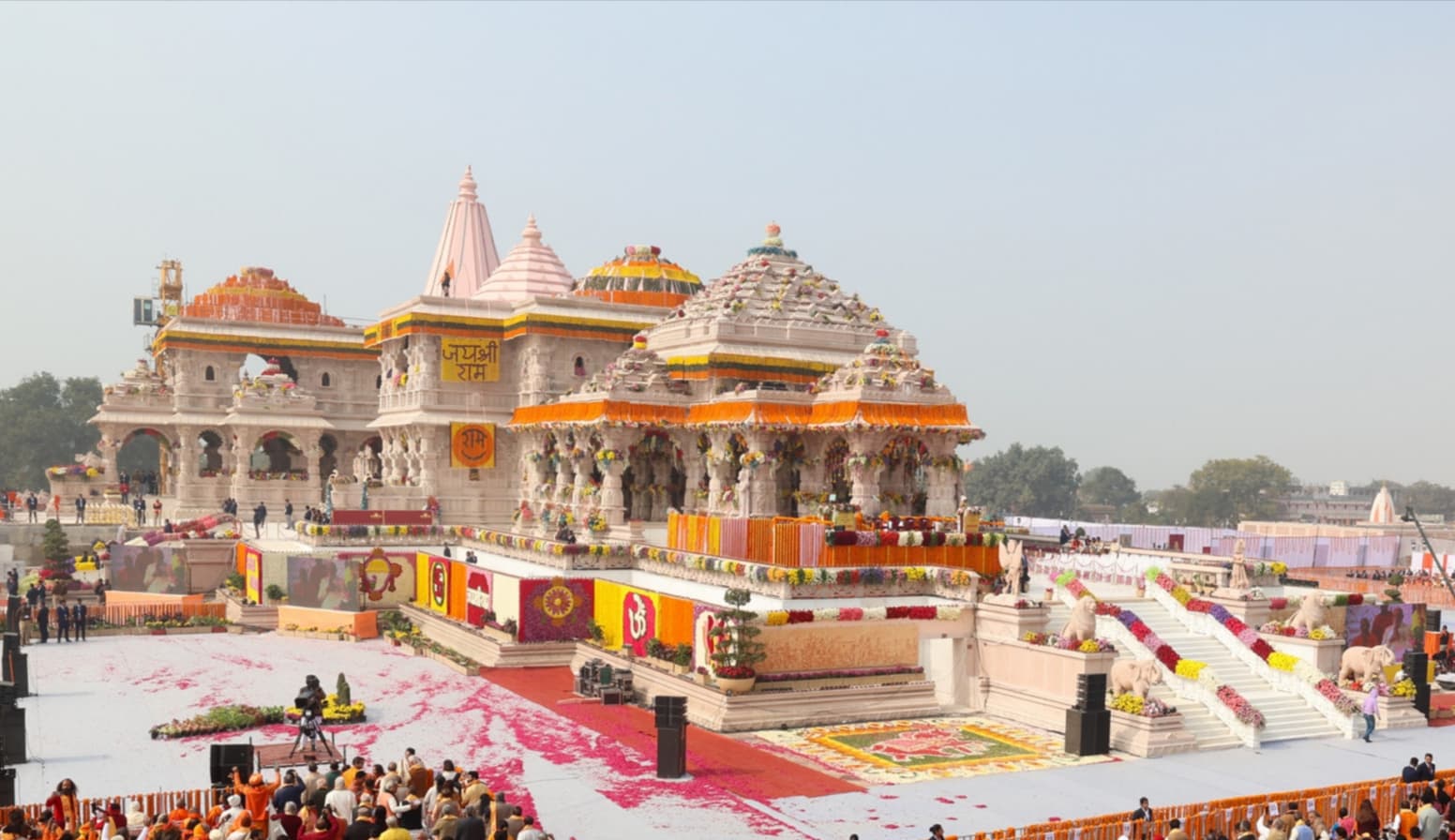
Ram Janmabhoomi Mandir. The reason you came. Allow two to four hours in total once you factor in security, the cloakroom and the queue — the darshan itself is quick, the logistics are what take time. Phones and cameras are not allowed inside. See our Sugam Darshan pass guide for how to reduce the wait, and the darshan guide for what you cannot carry in.
Hanuman Garhi. A hilltop Hanuman temple with around 76 steps, and the one local practice says you should visit before Ram Lalla — the tradition being that Hanuman leads you to Ram. Regardless of custom, it is worth doing first because it is quick and sets the day up well. The view over the city from the top is the best you will get. Allow 30–45 minutes.
Kanak Bhawan. A short walk from Hanuman Garhi, traditionally the palace given to Sita at her marriage. The present building is far later than the story, but the temple holds a celebrated pair of Ram and Sita idols and is at its calmest in the early morning. Allow 30 minutes.
Dashrath Mahal. Close by, and believed to be where Ram grew up. There is a small museum of sculptures inside. Often nearly empty, which is part of its appeal. Allow 20–30 minutes.
Along the Saryu
Ram Ki Paidi. The long run of ghats on the Saryu and the social centre of the city. The evening aarti here is the second thing visitors remember about Ayodhya after the temple. Arrive 30–45 minutes early if you want to sit on the steps. The morning light is also excellent and there is almost nobody about. Allow an hour for the aarti.
Guptar Ghat. The quietest of the ghats and the one people come back talking about, traditionally associated with Ram's departure from the world. It sits away from the centre, so you need a car. Allow 45 minutes plus travel.
Treta ke Thakur. A small temple near the river holding a set of statues recovered from the Saryu. Not grand, not on most itineraries, and exactly the sort of place that rewards the extra half hour. Allow 30 minutes.
The older city
Nageshwarnath Temple. One of the oldest surviving temples in Ayodhya, dedicated to Shiva and traditionally said to have been established by Kush, Ram's son. A reminder that this was a Shaivite city long before it became a Vaishnavite pilgrimage centre. Allow 30 minutes.
Mani Parbat and Sugriv Parbat. Two ancient mounds in the city, associated in tradition with the Ramayana. Little visited, and mostly of interest if you have already done the main sites and want more. Allow 30–45 minutes combined.
Chhoti Chhavni and the Jain temples at Ajodhya hill. For travellers interested in the city's Jain heritage, which most visitors never encounter.
Just outside the city
Nandigram. Roughly 20 km out, traditionally the place where Bharat ruled during Ram's exile while refusing the throne. Quieter and greener than the city, and worth a half day if you have a third day.
Bharatkund. A tank associated with Bharat, on the Nandigram side. Combine with Nandigram rather than making a separate trip.
The lanes and the food
The old bazaar between the temple and the river is worth walking slowly. Look for Ayodhya's peda — the milk sweet the city is known for, best bought fresh and by weight — along with kachori and sabzi in the morning and chai essentially anywhere. Most restaurants near the temple are vegetarian and sattvic, and there is no alcohol in Ayodhya. Our guide to what to eat and buy in Ayodhya goes through it properly.
How to fit it together
One day: Hanuman Garhi, Ram Mandir, Saryu Aarti. That is a complete and satisfying trip.
Two days: add Kanak Bhawan, Dashrath Mahal, Nageshwarnath and Guptar Ghat. Our two-day itinerary puts them in the right order.
Three days: everything above, plus a half day in the lanes and an outing to Nandigram.
Practical notes
- Central Ayodhya is small — most of these are within 3–4 km of each other. Traffic near the temple, not distance, is what eats time.
- You will remove your shoes repeatedly. Slip-on footwear saves real fuss.
- Carry small notes for offerings, autos and chai.
- Traditional dress is not compulsory but is expected in the older temples.
- Most of these sites are free to enter. Donations are voluntary.
Where to go next
- Ayodhya in two days: a realistic itinerary — the right order to see all of this.
- Things to do in Ayodhya beyond the Ram Mandir — a shorter, curated version of this list.
- Ram Mandir VIP Darshan Tour, 3 days from ₹4,999 — all of it arranged for you.
Planning a visit and want someone local to handle it? Our office is on NH 28, Deokali Bypass, Ayodhya. Message the desk on WhatsApp at +91 84008 08200.
Darshan timings, entry arrangements and aarti schedules at Ayodhya's temples change with the season and with temple administration. Confirm current details with us before you travel rather than relying on any page, including this one.
Planning this trip?
Talk to our Ayodhya desk before you book anything.
We are a local Ayodhya agency — hotels, darshan passes, AC cabs and guides arranged by the same team that meets you at the airport. Rated 4.9 on Google by pilgrims who travelled with us.
Written by the Go Ayodhya desk
A local team on Deokali Bypass, Ayodhya — we run the ground ourselves, not through sub-contractors. Anything in this guide we can also arrange for your dates: about us or talk to us.